PMI Pioneer Perspectives
In the Pioneer Perspectives series, PMI brings you closer to the people behind some of the ideas and discoveries that have shaped the field. In each portrait, a leading researcher reflects on the experiences, choices and people that have influenced their scientific journey – and shares lessons and advice for the next generation of researchers.
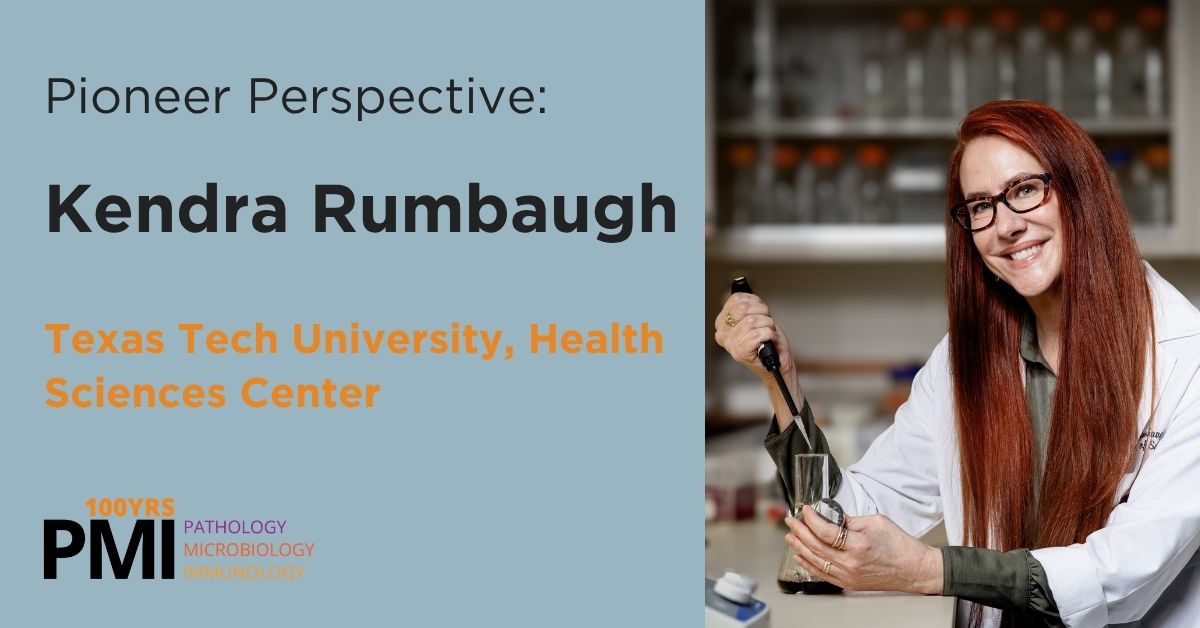
Pioneer Perspective: Kendra Rumbaugh
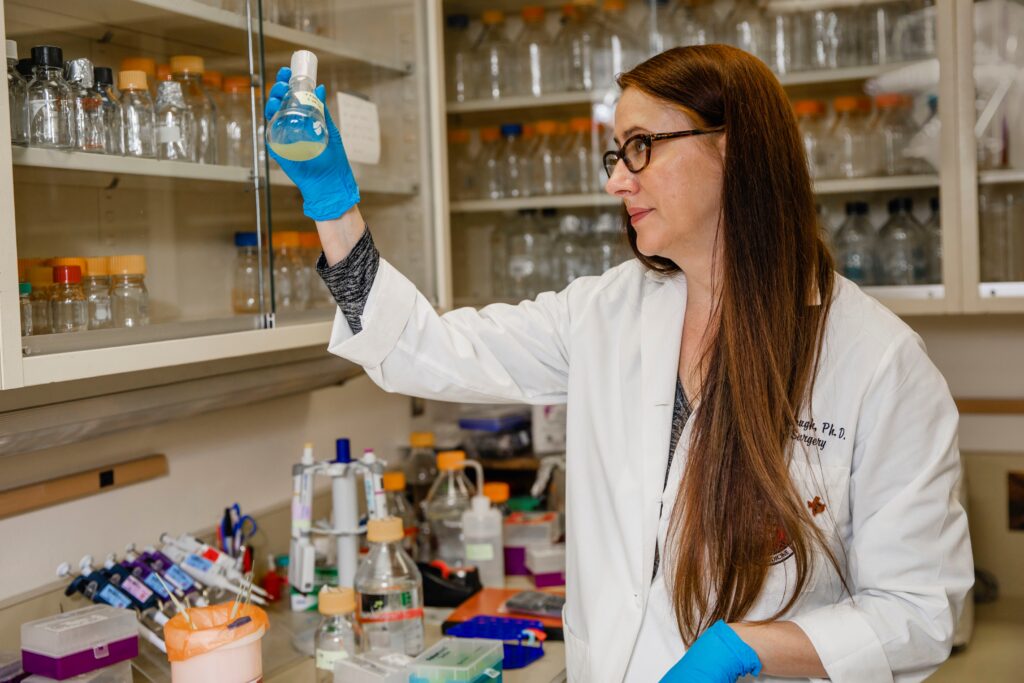
Professor Kendra Rumbaugh is an American microbiologist whose research focuses on bacterial pathogenesis in acute and chronic wound infections. Her work has advanced our understanding of biofilms, quorum sensing, and polymicrobial interactions in vivo while helping translate these insights into new therapeutic strategies for chronic wound infections.
What is your field of research, and how would you explain it to someone outside your field?
My research is focused on wound infections. I am a microbiologist by training so I am interested in the microbes that infect wounds, e.g. how they do so and how we might better kill them when they create infections. Specifically, we study biofilms that form in wounds, which is essentially a protective sticky substance that surrounds the microbial communities, making them hard to kill with conventional treatments.
What inspired you to pursue a career in this field?
I was interested in medicine but did not particularly want to become a physician. Then, when I was an undergraduate in college, I took my first microbiology class. It was taught by a fantastic professor who made everything about bacteria seem fascinating. After that I knew that I wanted to study bacteria, but I wanted to do it in the context of medicine. Infectious disease seemed a natural fit and housing my research lab in a clinical department was really perfect. I very much appreciate the clinical perspectives of my physician colleagues, which helps guide the research questions we ask. They are treating patients with wound infections in the clinic and tell us about the problems they encounter. We can then formulate hypotheses for the cause of these problems and plan experiments in the laboratory to test the hypotheses.
My interest in biofilms specifically can be traced directly to the “Father of Biofilms” himself, Bill Costerton. I first learned about biofilms around 1998 and chose the topic for my PhD qualifying examination. As part of the exam, I had to write a mock grant proposal on a subject that was entirely new to me, and I quickly found myself with far more questions than answers. Because Bill Costerton’s name appeared on nearly every paper I read, I naively reached out to him with what were undoubtedly some very basic questions. At the time, I had little appreciation for just how prominent and busy he was.
However, despite my being an unknown graduate student, Dr. Costerton took the time to answer every question and even called me to discuss them personally. That generosity made a profound impression on me, and from that moment on, I was captivated by biofilms.
Dr. Costerton’s kindness did more than shape my scientific interest; it influenced the course of my career and taught me an enduring lesson about mentorship. His willingness to invest time in a young scientist demonstrated the extraordinary impact that even a brief interaction can have on a student’s future. It also instilled in me a deep sense of responsibility as a mentor. We have tremendous influence over the trajectories of our students’ careers, and I regularly remind myself to be as generous with my time and encouragement as Dr. Costerton was with me.
What do you enjoy most about being a researcher?
I most enjoy the autonomy that academia provides and the ability to pursue any idea I dream up. I also love working with and mentoring students. It is wonderful to see their transformation as their training progresses. The best part is when everything finally clicks for the student and they take ownership of the project. They begin to have exciting ideas that you’ve never thought of – it is immensely rewarding.
It is also enjoyable to be surrounded by intelligent, driven colleagues who make you a better scientist. I have been very lucky to have incredibly supportive and collegial colleagues and supervisors for all of my career. I have also been very fortunate to travel to places I never would have visited in many other careers for conferences, collaborations and invited lectures.
What has been the most exciting or surprising finding in your career so far?
I cannot identify one finding – maybe that means it is still in the future! However, I never cease to be surprised by experimental results. Experiments rarely work the way you predict they will, and an unexpected result is always exciting because it frequently leads to new areas you never thought of.
What has been the biggest challenge you have had to overcome as a researcher?
I think my biggest career challenge has been my own self-doubt. Most of the barriers in my way have been of my own making – e.g. imposter syndrome and fear of the unknown. I think many academics and scientists struggle with this and for me, the only way out is through. I have to constantly challenge myself with new, higher hurdles to prove to myself I can jump them. The other big challenge is of course obtaining funding to do the research. This is a constant challenge and over the 25+ years I have been a researcher there have been mediocre, difficult, and really difficult times, but never easy times for obtaining funding.
Who or what has influenced or motivated you the most throughout your career?
In the first half of my career, I would say it was the terrific mentors and colleagues who saw more in me than I did in myself. They pushed me out of my comfort zone and into roles and positions I never would have sought independently. Nowadays, I am more motivated by being that person for younger generations of scientists. I love seeing their confidence grow and their accomplishments accumulate.
What advice would you give to early-career researchers today?
It is a precarious time for research. Obtaining funding and securing a stable position are more challenging than I have seen in my career. But while there is uncertainty, it is also an exciting time of massive change and there are many opportunities to shape the field in unconventional directions. My advice would be to be flexible and able to pivot. Use the creative part of your brain, not just the analytical part. Don’t be afraid to break out of the mold and follow paths that others might feel are too risky. Develop your interpersonal skills – science should be collaborative! And most importantly, be kind to your trainees.