
Journal of Pathology, Microbiology, and Immunology congratulates Johan Ringlander on winning the PMI Award 2026
Research Focus and Scientific Interests:
What were your thoughts on being nominated for this year’s PMI Award?
When I was contacted by the Swedish Society for Clinical Microbiology and asked whether I would like to be nominated for the PMI Journal Award 2026, of course I said yes, but I did not really expect to receive the award. I think the committee appreciated the relatively broad profile of my research, with work spanning virology, immunology and pathology.
Looking back, much of that has come from being open to new collaborations and saying yes when I liked the people involved or found the idea exciting.
Why did you become a researcher?
I started studying medicine and, after a couple of years in medical school, I became involved in Magnus Unemo’s research group in Örebro, focusing on antimicrobial resistance in gonococci. I completed both my bachelor’s and master’s theses there as part of the medical program and also worked with the group during the summers. It was a fantastic experience. My supervisors, Magnus and Daniel, were highly supportive, and the research was both of high quality and of direct clinical relevance. I was hooked.
My hometown, Gothenburg, Sweden, has a strong tradition in virus research, and when I moved back, I was fortunate enough to begin working with my future PhD supervisors Magnus Lindh, Kristoffer Hellstrand, and Simon Larsson, all of whom played an important role in helping me stay in – and thrive within – research.
Who inspires you academically?
I am mainly inspired by people I have worked with. I have had several fantastic supervisors who inspired me in different ways. What they all share is a strong devotion to their work, combined with the importance of enjoying what you do and having a good time while working.
Since the start of my PhD, when I entered the field of viral hepatitis, Stephan Urban has been a major inspiration. I was actually a bit starstruck when I asked to join his lab as a postdoc. His dedicated search for the hepatitis B and D receptor, and the subsequent development of an entry inhibitor that is now making a real difference for patients with hepatitis delta virus, has been incredibly inspiring to follow.
Someone I obviously never worked with, but who has also inspired me greatly, is Frederick Sanger. His genius methodological innovations enabled countless discoveries across biology and medicine. I also admire his attitude towards science. I once read that he described himself simply as ”a chap who messed around in a lab”, which I think says something valuable about curiosity and scientific culture.
What research are you reading right now for inspiration?
At the moment, I am reading a lot about new and innovative methods for studying viruses and analysing complex datasets. I have recently started working with single-cell data, so I have been spending quite a bit of time reading papers in that area.
Lately, I have also been reading a great deal of cancer research, particularly to explore methods and analytical approaches that may be useful for some of my planned experiments.
What are your scientific aspirations?
I want my research to have clinical impact. It does not always have to be direct clinical impact, but I want to be able to see how the work may eventually contribute to a better understanding of disease mechanisms, immune responses, or patient care. In the end, I want to be able to imagine – and argue for – how the research can become useful for patients.
Life in the Lab and Beyond:
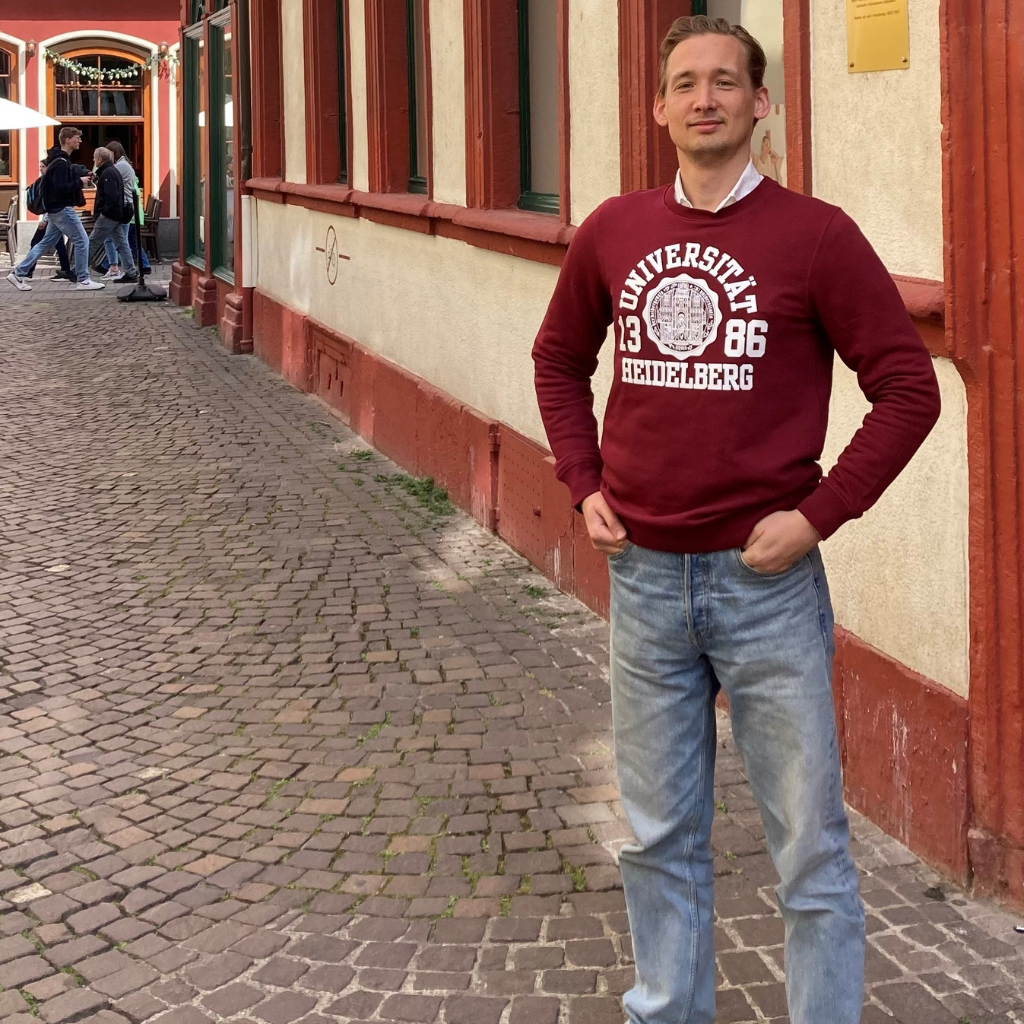
From Heidelberg, where I spent last year at the Center for Integrative Infectious Diseases Research. I am still involved in the work of Stephan Urban’s group there.
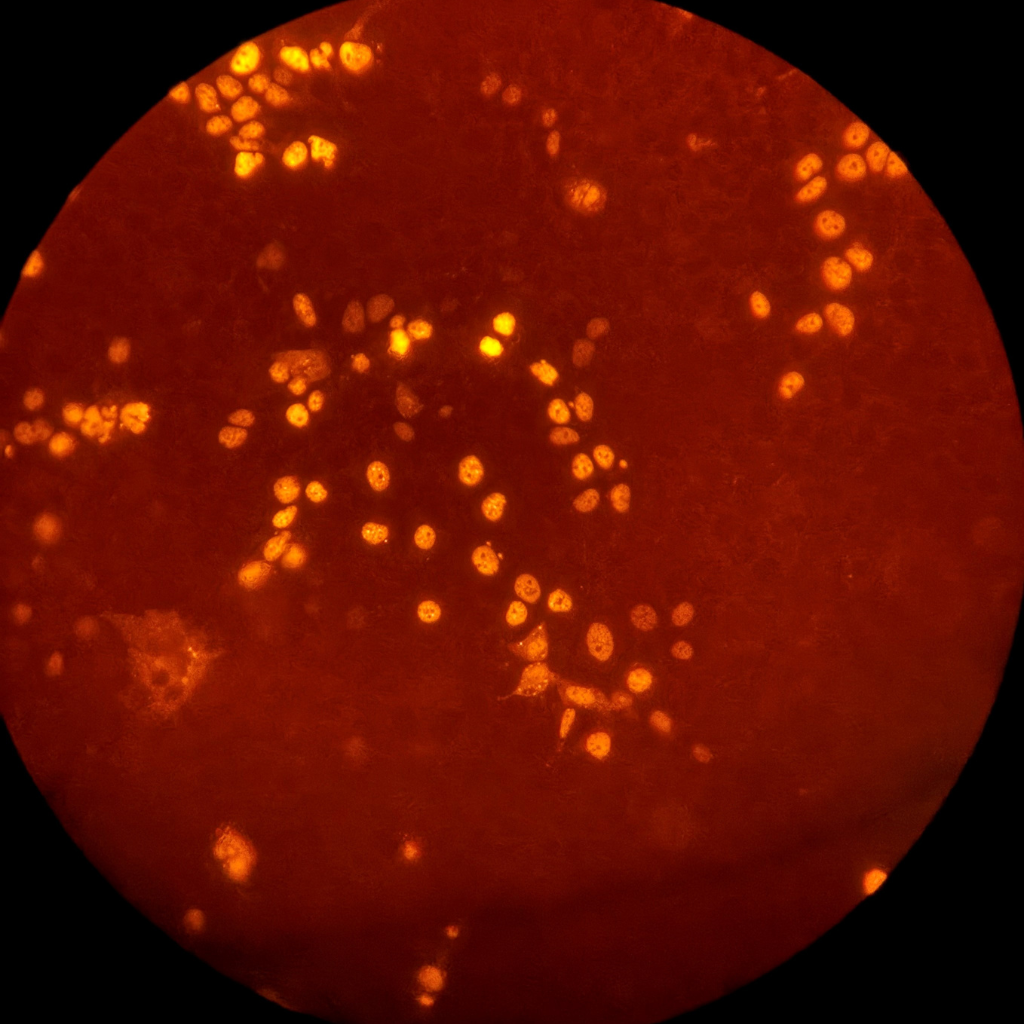
A picture from a typical day at the microscope, looking through well after well of hepatitis delta virus immunofluorescence.
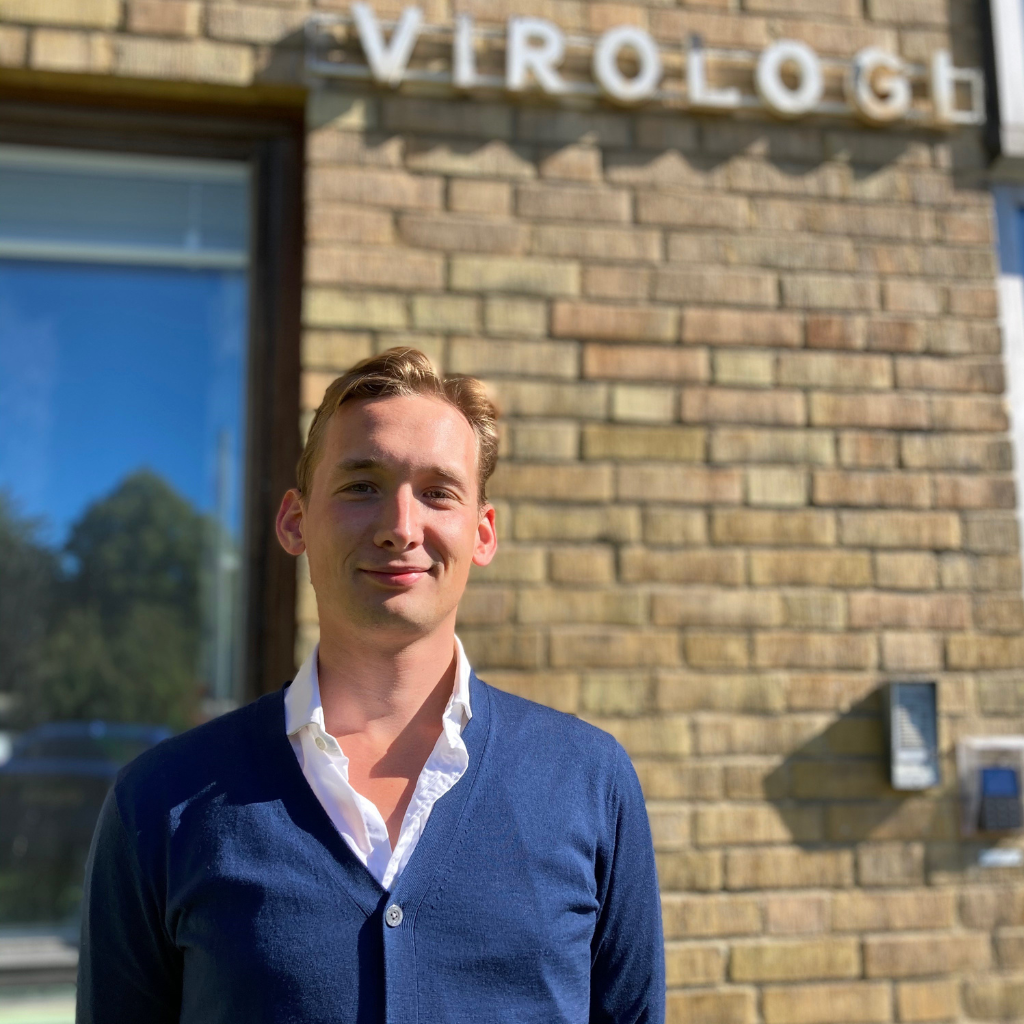
Outside the virology laboratory in Gothenburg, where I spent most of my career and where I currently work.