
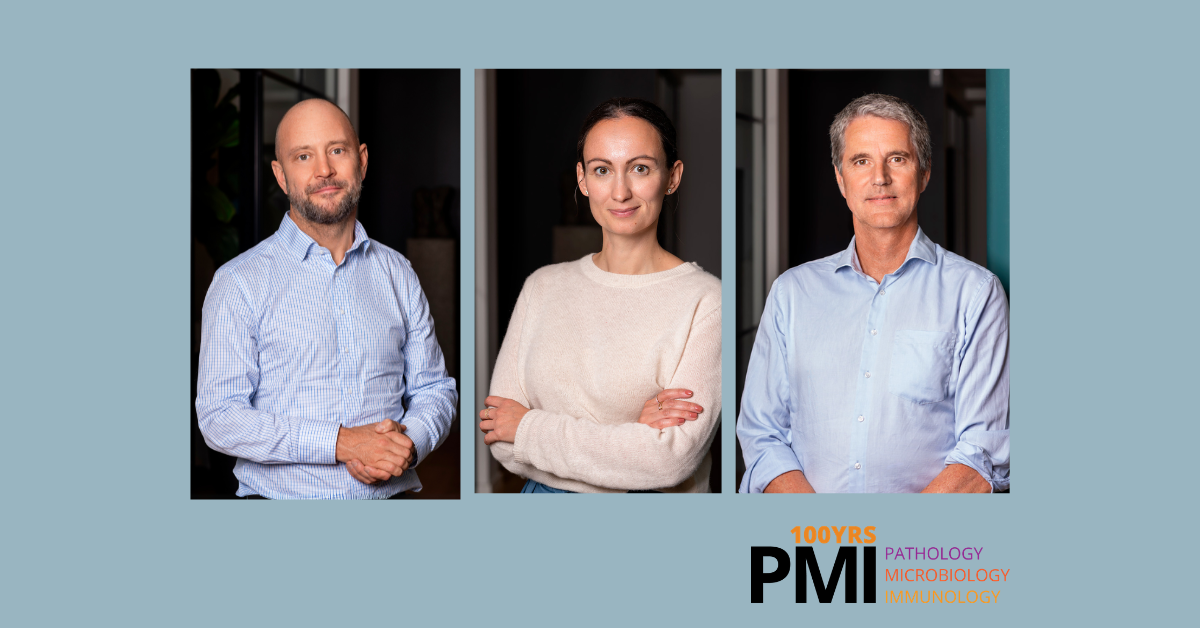
In naming the first recipient of the PMI Award, the editorial board also wishes to congratulate Johan Ringlander from Sahlgrenska University Hospital, Göteborg, Sweden and to highlight the broader purpose of the award: to recognise and encourage young researchers who are helping to shape the future of pathology, microbiology, and immunology.
Scientific progress depends on emerging talent. Yet many early-career researchers produce outstanding work long before they receive wider recognition, if they receive it at all. Societies are often quicker to celebrate talent in fields such as sport than to recognise scientific potential. The award was created to make such scientific contributions more visible at a stage where acknowledgement can carry particular value. In that sense, it is not only a recognition of achievement already demonstrated, but also an investment in future discovery.
“By highlighting emerging talent, we aim to foster interdisciplinary collaboration and support the next generation shaping the future of pathology, microbiology, and immunology.”
Alexandra G. Gheorghe, Editor-in-Chief
The editorial board also emphasises that timely recognition can matter greatly in a scientific career. Support at an early stage can strengthen confidence, create momentum, and help talented researchers continue ambitious work. The award is therefore intended not only to honour excellence, but to nurture it. Because candidates are nominated by PMI member societies rather than through self-nomination, that recognition is rooted in peer communities and carries the authority of scientific judgement.
“With the PMI Award, we aim to give something back to the scientific community by recognising early-career researchers when support and visibility can help shape what comes next.”
Thomas Bjarnsholt, Editor-in-Chief
The award also reflects a clear understanding of interdisciplinarity. Many of the most important advances in modern medicine emerge where disciplines meet, when different methods, concepts, and traditions are brought into productive dialogue. The history of PMI itself reflects this principle.
What began as a journal rooted in microbiology and pathology later expanded to include immunology, recognising that disease is rarely explained through a single lens alone, but through the dynamic interplay between pathogen, tissue, and host response.
Yet interdisciplinarity is not breadth for its own sake. Meaningful collaboration depends on strong foundations: deep expertise within a core discipline, intellectual rigour, and the ability to bring something substantial to a wider scientific conversation. The most valuable bridges are built between fields that are themselves strong.
“We aim to recognise young researchers who engage across pathology, microbiology and immunology, while maintaining strong depth in their core discipline. Multidisciplinary work is not a goal in itself. It only creates value when it is grounded in strong disciplinary quality.”
Peter Østrup Jensen, Editor-in-Chief
The award is therefore more than a prize for individual achievement. It is also a statement about the kind of science the field wishes to encourage: rigorous, ambitious, collaborative, and forward-looking.
The first recipient sets a high standard. Just as importantly, the award sets an intention: to ensure that outstanding emerging talent is seen, encouraged, and supported at the moment when recognition can shape what comes next.
Read more here: https://pmijournal.org/pmi-journal-award/